Earlier this month, a survey telescope caught a white dwarf blowing itself apart in a galaxy tens of millions of light-years away. It should be at its brightest right about now. Explosions like this are thought to take their time, often billions of years. This one sits right beside two young star clusters, which would make it a rushed job.
Later tonight, a telegram sends an astronomer in Madras hunting for a comet that had already fallen to pieces. A woman in Alabama is woken from her nap by a rock from space. And a Belgian priest quietly cuts his own discovery out of his paper. That last one is my favorite.
1. 💥 SN 2026ahvu, the supernova that may have come early
On November 2, a robotic survey telescope called ATLAS caught a new point of light in NGC 1433, a barred spiral galaxy in the southern sky. The next day, a spectrum from the Keck telescope in Hawaiʻi said what it was: a young Type Ia supernova. It's now called SN 2026ahvu.
A Type Ia supernova is a white dwarf blowing itself apart. A white dwarf is the dense core a star like the Sun leaves behind. It has no fuel left to burn. If it gains too much mass from a partner star, or merges with another white dwarf, it can ignite all at once and explode.
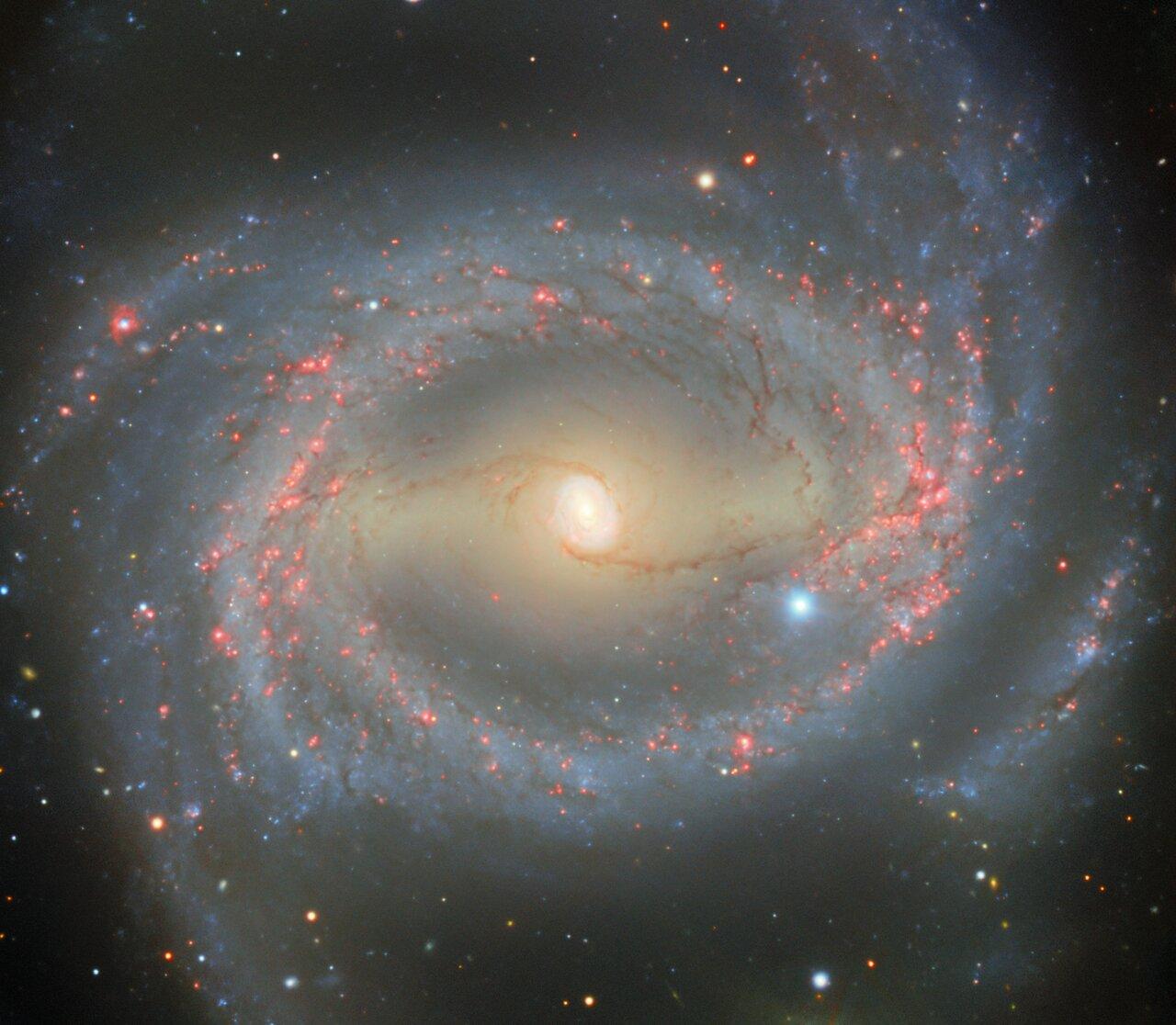
It was caught early, and it kept getting brighter. It was expected to peak between November 18 and 23, so it should be near its best this week. From the southern hemisphere, it's within reach of a modest backyard telescope. It's one of the nearest explosions of its kind since SN 2011fe lit up the Pinwheel Galaxy in 2011.
Being so close means there are sharp old photos of the exact spot. Hubble and the James Webb Space Telescope had both imaged NGC 1433 for a survey of nearby galaxies.
Sumit Sarbadhicary and his colleagues went back to those images. They found the supernova sitting right between two young star clusters. The odds of landing that close by chance are about 0.4 percent.
That's a surprise, and the reason takes a few steps.
A white dwarf can only explode after it exists. First a star has to live its whole life and die. The heaviest stars that still end up as white dwarfs have about eight times the Sun's mass. Heavy stars burn fast, and these ones last about 40 million years.
After that, the white dwarf may have a long wait before it finds enough extra mass. Astronomers think many Type Ia supernovae take billions of years to happen. The time from a star's birth to its explosion is called the delay time.
The two clusters next to SN 2026ahvu are young. One is about 95 million years old. The other is only about 37 million years old, close to the shortest delay that's possible at all.
If the supernova came from the younger cluster, its white dwarf blew up almost as soon as it formed. If it came from the older one, the wait was still under 100 million years. Quick explosions like this were known mostly from statistics. This is likely the first time one has been tied to young star clusters in a nearby galaxy.
There's a bonus. Nobody agrees how far away NGC 1433 is. Two published measurements put it at about 30 million or about 62 million light-years.
Type Ia supernovae peak at a well-known brightness, which is why astronomers use them to measure the universe. How bright SN 2026ahvu gets at its peak should settle the argument. A white dwarf in a hurry is about to tell us how far its light has traveled.
2. ⭐ Cecilia Payne found what stars are made of, and was told it couldn't be true
In 1925, a young astronomer at Harvard put a strange warning into her own thesis. Her calculations said the stars were mostly hydrogen and helium. She wrote that the result was "almost certainly not real."
She was Cecilia Payne, and the calculations were right.
She'd grown up in England. As a student at Cambridge, she heard Arthur Eddington talk about photographing stars during the 1919 eclipse to test Einstein's theory. It turned her world upside down, and she switched to astronomy. Cambridge didn't give degrees to women then, and in 1923 she moved to the Harvard College Observatory.

Harvard kept star spectra on glass plates. A spectrum spreads a star's light into its colors. Each element absorbs a few exact colors, which leaves thin dark lines, like a barcode.
Those barcodes looked very different from one star to the next. The obvious reading was that stars were made of different things. Payne showed that mostly they weren't.
The key idea came from the Indian physicist Meghnad Saha. Heat strips electrons off atoms. An atom that has lost electrons absorbs different colors from one that hasn't. That means the same element can leave a different barcode in a hot star than in a cool one.
Payne used Saha's idea to match each kind of spectrum to a temperature. Once she did, she could work out how much of each element there really was. Elements like silicon and carbon came out in about the same proportions as on Earth. Hydrogen and helium were far more plentiful than anyone expected.
That clashed with what astronomers believed. The Sun's barcode looked a lot like the barcode of Earth's rocks, so the stars were thought to be made of much the same stuff. Henry Norris Russell, one of the leading astronomers of the day, reviewed her thesis and called the result spurious.
Payne kept her numbers in, and added the line about it not being real. She had written the thesis in what she later called a six-week ecstasy.
Four years later, Russell reached the same conclusion by another route. He mentioned Miss Payne's earlier work, but for a long time he got most of the credit. The astronomer Otto Struve later called hers the most brilliant PhD thesis ever written in astronomy.
Today we know hydrogen makes up about three quarters of the ordinary matter in our galaxy, and helium about a quarter. Everything else, including what Earth and we are made of, fits in the last couple of percent. Those heavier elements are made later, inside stars.
Payne stayed at Harvard her whole career. In 1956 she became the first woman there to be appointed a professor, and the first to chair a department.
3. 🪐 Uranus and Neptune may have restless magnets
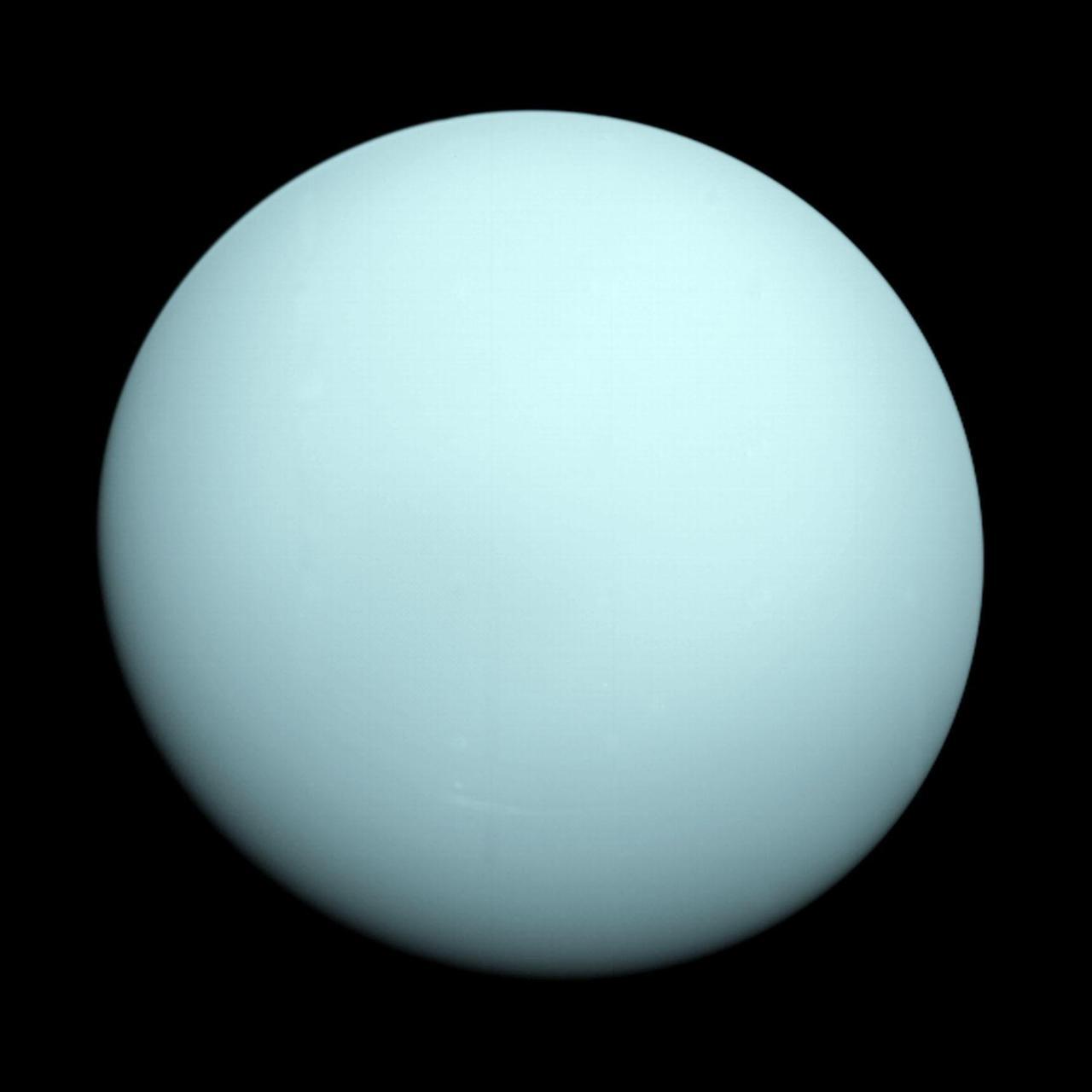
Everything we know about the magnetic fields of Uranus and Neptune comes from one spacecraft. Voyager 2 flew past Uranus in 1986, then Neptune three years later. No probe has been back since. Both fields turned out to be strange.
Earth's magnetic field is a lot like a bar magnet's. Its axis is tilted about 11 degrees from the axis the planet spins on. That's why a compass points roughly north.
Uranus's magnetic axis is tilted 59 degrees, and it's well off-center. Neptune's is tilted 47 degrees. Neither looks much like a tidy bar magnet. No other known planet has a field like theirs.
A planet's field comes from deep inside it. Fluid that can carry electricity churns as the planet spins, and that motion keeps a magnetic field going. On Earth, the fluid is molten iron in the outer core.
Uranus and Neptune are different inside. They're about four times as wide as Earth. They're thought to hold lots of water, ammonia and methane, along with hydrogen, helium and rock. Deep down, the pressure and heat are enormous.
Chi Yan and colleagues built computer models of those insides. Their key ingredient was simple. Under such pressure, water molecules can break apart into charged pieces called ions. So the deeper you go, the better the material carries electricity.
When the models included that change with depth, they produced fields with the same lopsided features Voyager saw. And the fields didn't sit still.
Yan points out that "Earth's magnetic tilt drifts by only a degree or so over 50 years." In some stretches of the simulations, the ice giants' tilt swung by tens of degrees within decades. In others, it barely moved.
That raises an odd possibility. The fields Voyager measured may no longer look the same. Uranus and Neptune could have rearranged their magnets since the 1980s, and we'd have no direct way to know.
Voyager's single visit has caught us out before. In 2024, a team revisited its Uranus data and found that the spacecraft arrived during a rare squeeze. A blast of solar wind had compressed Uranus's magnetic bubble. Uranus is squeezed like that less than 5 percent of the time. Had Voyager come a few days earlier, it would have found a very different scene.
There may be a way to check from here. Auroras glow where a planet's magnetic field funnels charged particles into its air. Astronomers are already studying the ice giants' auroras with the James Webb Space Telescope. If the auroras have moved since Voyager's day, the magnets have probably moved too.
A firm answer, though, will probably need a new spacecraft at the ice giants.
4. 🕳️ Our galaxy's black hole woke up around 200 years ago
The black hole at the center of the Milky Way is quiet. Sagittarius A* weighs millions of Suns, but it eats very little, so it gives off very little light. Yet some cold, dark clouds near it glow in X-rays. Cold gas shouldn't do that.
Back in the 1990s, X-ray satellites found this glow lining up with clouds of gas near the galaxy's center. Its colors had a telltale pattern. It looked like X-rays that had hit cold material and bounced off.
But X-rays from what? Nothing near the center today is bright enough to light the clouds up.
One idea was an echo. Suppose the black hole flared up for a while, long ago. Its X-rays would race outward in every direction. Some would come straight to Earth, long before anyone had an X-ray telescope. Others would hit the clouds first and bounce toward us.
That bounce adds distance, so the reflected light arrives later. The clouds would still be glowing with a flash that has otherwise passed us by. Sagittarius A* could produce a million times more X-rays than it does now if it got a big meal. A flare lasting even a few hours could explain the glow.
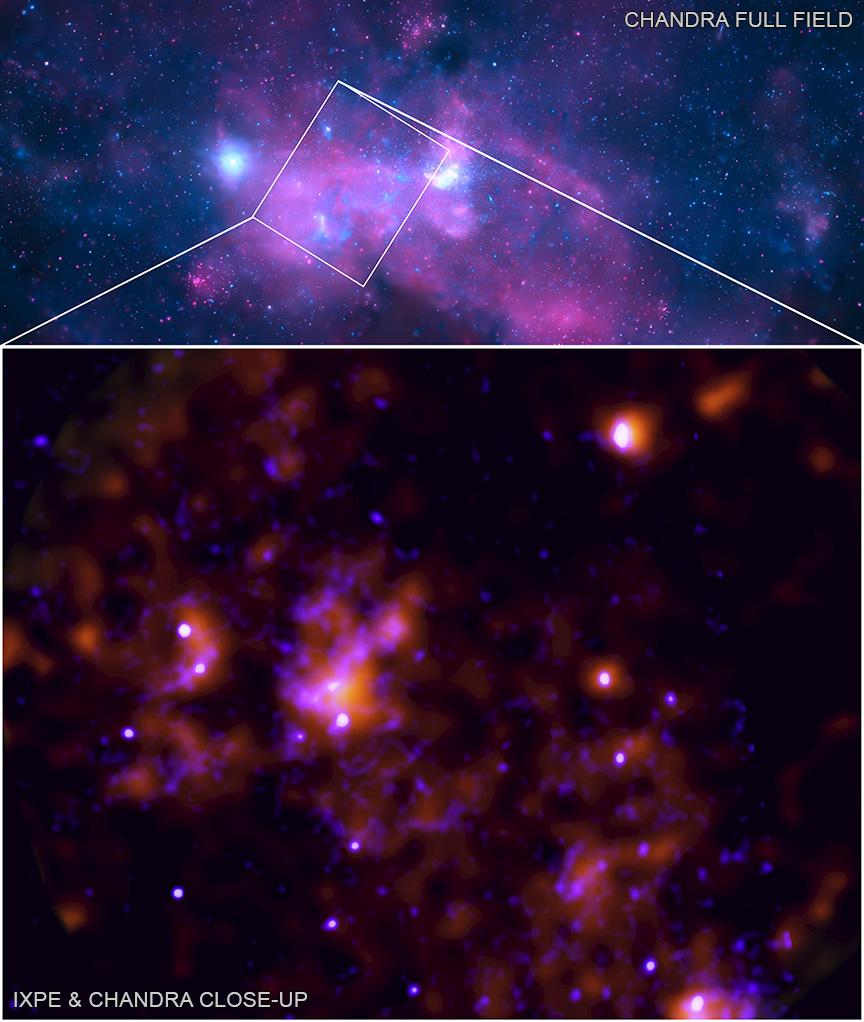
Over the years, the evidence piled up. Chandra and XMM-Newton watched bright patches move across the clouds faster than light seemed to allow. Nothing was actually moving that fast. A flash was sweeping across the gas and lighting up different parts in turn.
One prediction was still untested. Light that bounces off something becomes polarized. Its waves tend to vibrate in one direction, at right angles to the direction the light came from. Polarized sunglasses use the same effect to block glare bouncing off a road.
Measure that direction, and you know where the light came from. But it takes a telescope that can measure the polarization of X-rays. NASA's IXPE launched in December 2021, and in early 2022 it stared at the clouds.
The X-rays were polarized, and their direction fit Sagittarius A*. The polarization worked like a compass needle, and it pointed straight back at the black hole.
How strongly the light is polarized depends on the angle it bounced at. That fixes where the clouds sit, and so how long the detour took. The flare happened roughly 200 years ago, around the start of the 19th century. Possibly the black hole had suddenly swallowed a helping of gas.
The team wants to look again to narrow down the date and the brightness. Our black hole has been caught flickering in recent years too. Nobody yet knows how often it has real feasts like this one.
5. ☄️ Biela's Comet split in two, and then it rained
In January 1846, astronomers watching Biela's Comet noticed something odd beside it. A second, fainter comet was traveling alongside, close enough to look like a twin.
Biela's Comet was famous already. An army officer named Wilhelm von Biela had worked out its orbit in 1826. It came back every six and a half years, which made it only the third comet known to return on a schedule, after Halley's and Encke's. Its path also crossed Earth's orbit, which made people nervous.
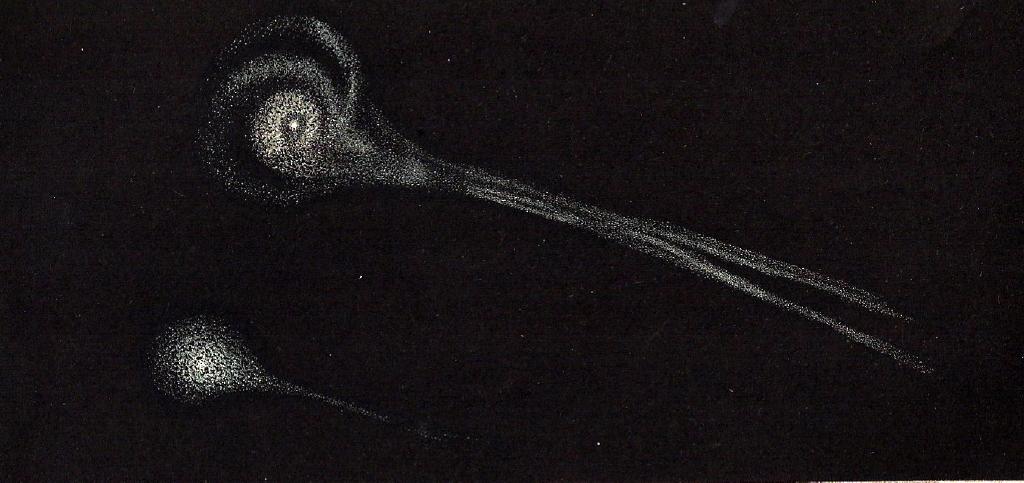
Through 1846, astronomers watched the two pieces take turns being the brighter one. Each grew its own tail, and the two tails ran side by side.
Both pieces came back in 1852. Then they never came back again. Astronomers searched hard at the next returns and found nothing. One by one, they gave up.
On the night of November 27, 1872, an answer of sorts arrived. A meteor shower poured out of the constellation Andromeda, by some counts 3,000 meteors an hour. It came from just where the comet's path crossed Earth's.
The comet hadn't simply vanished. It had crumbled, and Earth was plowing through the dust it had left along its path. The shower became known as the Andromedids, or the Bielids.
Not everyone had given up, though. Ernst Klinkerfues, in Göttingen, thought the comet itself might still be found, and he worked out where to look. The spot was far down in the southern sky.
Klinkerfues sent a telegram to Norman Pogson, at the observatory in Madras. It read: "Biela touched Earth on 27th: search near Theta Centauri."
Pogson had two cloudy nights. On the third morning, the clouds broke for about ten minutes. He spotted something that looked like a comet at first glance. The next morning he saw it again, now with a short tail.
He was satisfied he'd found Biela's Comet. Later calculations said probably not. The astronomer Patrick Moore thought it had to be an unrelated comet, which made it an almost unbelievable coincidence: a stranger, sitting right where Pogson was told to look.
Pogson's comet hasn't been seen since, and neither has Biela's. The Andromedid showers faded too. Comets breaking apart is nothing unusual. Watching one split, then walking through what's left of it, is.
6. 📡 A white dwarf with a Sun-like partner pulses every eight minutes
Every 7.9 minutes, a flash of radio waves arrives from a spot more than 5,000 light-years away. Each one switches on, then off again. Between flashes, nothing.
Signals like this belong to a new and puzzling group. Astronomers call them long-period transients. Pulsars, the spinning neutron stars that sweep radio beams around like lighthouses, usually turn in a second or less. These take minutes or hours.
The first was found in 2021 by a team in Western Australia, and we met one of them in an earlier issue. About a dozen are known now. Some are pairs of stars: a white dwarf and a small red dwarf. But which of the two sends the pulses has been hard to pin down.
The new one, GPM J071507−114153, showed up in a radio survey of the Milky Way with the Murchison Widefield Array, in Western Australia. The MeerKAT telescope in South Africa then pinned down where it was. The Keck telescope looked at that spot in ordinary light and found a star a lot like the Sun.
That's a first. Until now, these pulses had come from white dwarfs paired with small, cool red dwarfs.
The pulses had a second, slower rhythm underneath. They changed in a pattern that repeated about every 1.3 days. That's thought to be how long the two stars take to orbit each other.
For the first time, the pulses were sharp enough to follow the white dwarf around its orbit. Sam McSweeney led the study. He's sure of one thing: "we know that the pulsations are coming from a region close to the white dwarf, or possibly even from the white dwarf itself."
Then the pulses started reporting on the other star.
Radio waves have a direction they vibrate in, called polarization. When they pass through hot, electrically charged gas threaded with a magnetic field, that direction gets twisted. The more gas and field they cross, the bigger the twist.
Once per orbit, the white dwarf passes behind the Sun-like star, as seen from Earth. Its pulses then have to cross that star's hot outer atmosphere, its corona. Right then, the twist in the pulses changed quickly. The beam was shining through the other star's weather.
The team even saw the white dwarf pass behind what was probably a prominence, a huge loop of hot gas held up by magnetic fields. The Sun throws up prominences all the time. Spotting one on a star more than 5,000 light-years away, with a dead star's radio flashes as the probe, is quite a trick.
The study concludes that in systems like this, the pulses depend on the white dwarf interacting with its partner. Exactly how is still open. McSweeney hopes the much bigger radio telescopes being built in Australia and South Africa will find many more of them.
7. 🔴 Opportunity landed in a field of Martian "blueberries"
In January 2004, NASA's Opportunity rover landed on Mars and came to rest inside a small crater, a lucky shot people called a hole in one. On its first day, its cameras showed the ground scattered with thousands of tiny gray balls.
They were a few millimeters across. Next to the rusty red dust they looked bluish, so the team nicknamed them blueberries. Soon the rover found more of them stuck inside the layered rock, like blueberries in a muffin.
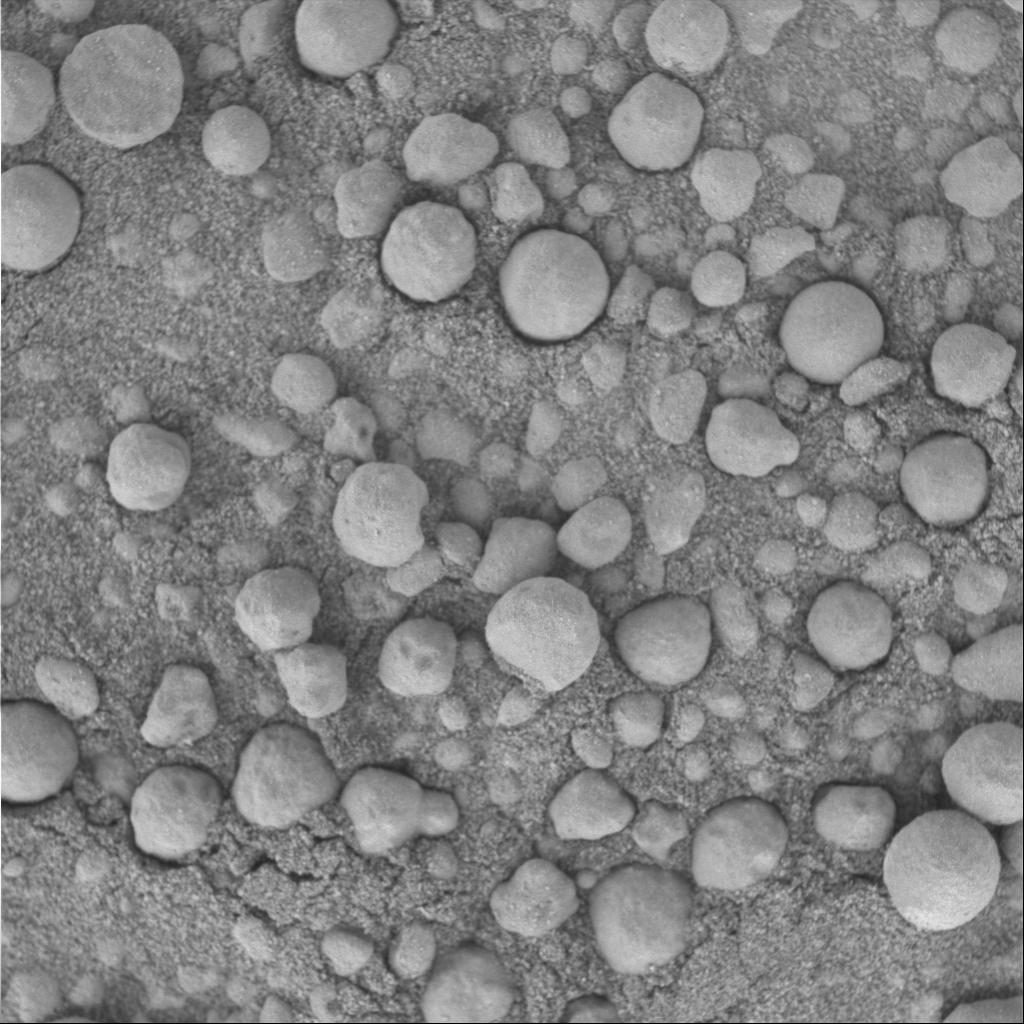
Opportunity hadn't landed there by chance. Years earlier, an orbiting spacecraft had found a patch of Mars rich in gray hematite, a form of iron oxide. On Earth, that kind of hematite usually forms with the help of water. The site was picked to find out if water had once been there.
The rover soon showed that the blueberries were rich in hematite. The question was how little round balls of it had formed.
A team in Utah thought they already knew. In the red sandstone of southern Utah, similar iron-rich balls lie around in great numbers. Geologists call them concretions.
Marjorie Chan and her colleagues had studied how the Utah ones formed. Groundwater seeping through the sandstone picked up iron from the rock. Where the water's chemistry changed, the iron came out again as hematite. It built up, layer by layer, into a hard ball.
Then the softer sandstone around them wore away over millions of years. The hard balls were left behind on the surface. They roll into low spots and gather in "puddles," just like the ones on Mars.
Two of Chan's coauthors had suggested in 2003, before Opportunity landed, that Mars might have such balls. Their abstract got little attention. Chan's verdict was simple: "We came up with the 'recipe' for blueberries."
There are differences. The Utah balls are mostly sand grains glued together by hematite. The Martian ones are probably close to pure hematite. And the water on Mars was likely acidic and salty.
The important part is the water itself. The blueberries most likely grew underground, inside the rock, from water seeping through it. The plains of Mars once had groundwater soaking through them, and the proof is lying on the surface, by the thousand.
8. 🌌 The Triangulum Galaxy seems to be missing its giant black hole
Galaxies with a round bulge of stars at their centers seem to keep a giant black hole there. Ours weighs millions of Suns. But in the Triangulum Galaxy, one of our nearest big neighbors, astronomers looked hard and found nothing.
The Triangulum Galaxy, also called M33, is a spiral about 3 million light-years away. It's the third-largest galaxy in our Local Group, after Andromeda and the Milky Way. On a very dark night, you can just see it with your eyes, as a faint smudge.
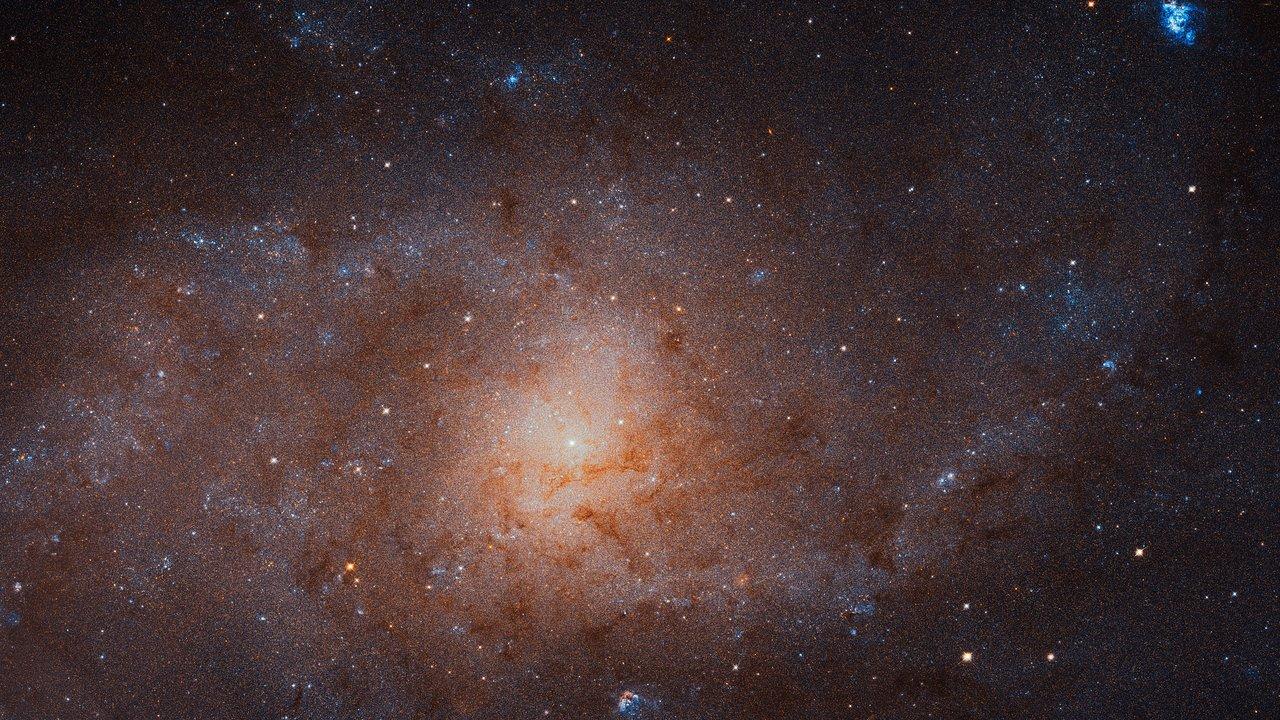
M33 is a bit unusual for a spiral. Most big spirals have a bulge, a round crowd of stars at the center. M33 doesn't. It's almost all flat disk.
Astronomers had found that a central black hole goes along with a bulge. The faster the bulge's stars move, the heavier the black hole. So what does a galaxy with no bulge have?
To weigh a black hole you can't see, you watch the stars around it. A heavy black hole makes nearby stars whirl faster. Look toward the center, and the stars' speeds should climb steeply.
In 2001, two teams used the Hubble Space Telescope to measure stars moving at M33's very center. David Merritt's team found the opposite of a black hole's signature. Toward the middle, the speeds dropped.
Karl Gebhardt's team found that the best match was no black hole at all. Anything there would have to weigh less than about 1,500 Suns. That's thousands of times lighter than the one in the Milky Way. They suggested that giant black holes come with bulges, and that disks don't make them.
Merritt's team found a similar limit, about 3,000 Suns. But they read it more cautiously. Going by how fast its central stars move, M33 should only have a small black hole anyway. Something around 2,000 to 20,000 Suns would fit. That's close enough to the limit that a small one could still be hiding there.
M33 has either no central black hole or a very small one. Either way, it doesn't follow the pattern of its bigger neighbors.
Small black holes do turn up in galaxies without bulges. NGC 4395 has one of roughly 10,000 Suns. Whether every galaxy grows a black hole at its heart, or only some do, is still an open question. M33, close by, is one of the best places to ask it.
9. 🪐 Gamma Cephei Ab, the first exoplanet, was found and then set aside
In 1988, a team of Canadian astronomers reported a slight, steady wobble in a star called Gamma Cephei. Something seemed to be tugging it back and forth every few years. It looked like a planet, seven years before the first planet was found around a Sun-like star.
The team was Bruce Campbell, Gordon Walker and Stephenson Yang. They were measuring how fast nearby stars move toward and away from us.
The trick works like this. A planet and its star both circle a shared center of mass. The star moves far less, but it does move. As it comes toward us, its light shifts slightly toward blue. As it moves away, the light shifts toward red.
Gamma Cephei's wobble was tiny. At its fastest, the star moves at about 27 meters per second, roughly the speed of a car on a highway. And it's about 45 light-years away.
But Gamma Cephei is a giant star, an older star that has swollen up. Changes in the star itself, like its slow rotation, can fake a wobble.
Walker and colleagues took a closer look in 1992. The star's own activity seemed to rise and fall on a similar schedule. That paper favored the star itself as the cause, and the planet was set aside.
Three years later, 51 Pegasi b became the first planet found around a Sun-like star. The exoplanet age had begun.
In 2003, Artie Hatzes, William Cochran and colleagues took another look at Gamma Cephei. They gathered four sets of measurements spanning more than 20 years. The wobble was still there, keeping the same rhythm all the way through. One full swing took about two and a half years.
Then they checked the star's activity again, and it didn't match. The activity behind the 1992 doubts had only shown up for about six years. It also repeated about every 2.1 years, not 2.5. A planet's tug keeps steady time. The star's own changes didn't.
The planet had been real all along. Today it's called Gamma Cephei Ab, and it has a proper name, Tadmor, the ancient name for the city of Palmyra. It's a giant at least one and a half times the mass of Jupiter. It circles its star at about the distance of the inner asteroid belt from the Sun.
Gamma Cephei is also a double star, with a small red dwarf on a much wider orbit. When the planet was confirmed, it was the tightest pair of stars known to have a planet.
The star has one more job ahead of it. Earth's axis slowly swings around, so the pole star changes over the centuries. In about 1,100 years, Gamma Cephei will sit closer to the north celestial pole than Polaris does. The first exoplanet ever spotted will be circling the pole star.
10. 🌠 Ann Hodges was hit by a meteorite in her living room
On the afternoon of November 30, 1954, Ann Hodges was napping on her couch in Alabama. A rock about the size of a grapefruit smashed through her ceiling. It bounced off her big console radio and hit her on the hip.
She woke up in pain. At first she thought the gas heater had exploded. Her mother ran outside and saw only a dark cloud in the sky.
Across the area, people had seen a fireball and heard a huge boom, in the middle of the day. Most assumed a plane had crashed. In fact, a meteor had come through the sky and broken into pieces. One of them had found a house near the town of Sylacauga, and then found Ann Hodges.
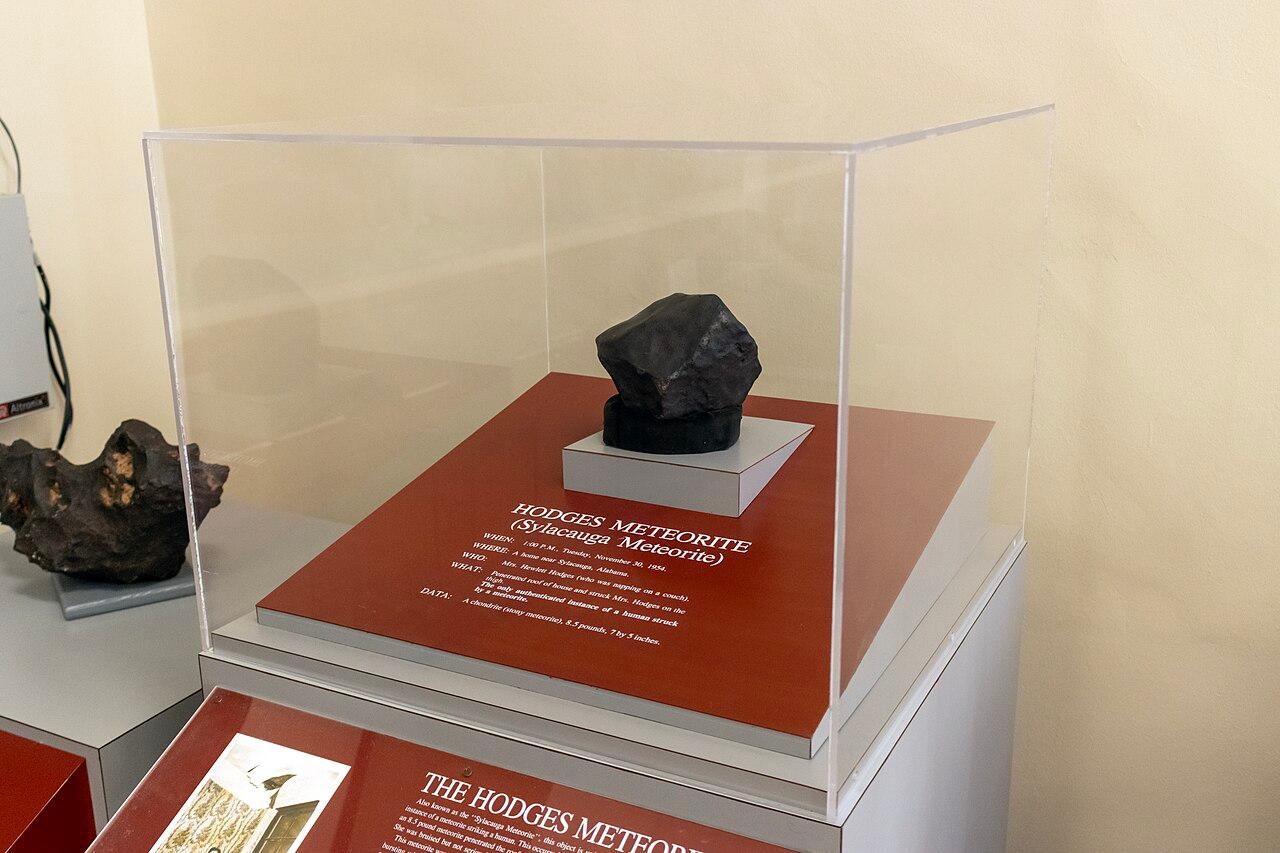
A doctor found her hip and hand swollen and sore, but no serious harm. A geologist doing fieldwork nearby took a look at the rock and thought it was a meteorite. That evening, Air Force officers took it away to be examined. By nightfall, about 200 reporters and sightseers had filled her yard.
It was indeed a meteorite, a stony one weighing about eight and a half pounds, a bit under four kilograms. It's the type called an ordinary chondrite.
The fame came quickly, and so did the trouble. The Hodgeses rented their house, and their landlady sued for the rock. Her lawyer had told her that meteorites belong to whoever owns the land. The public sided with Ann. The two sides settled before the case went to trial, and the Hodgeses kept it.
By then, the excitement had faded and the big offers had gone. Ann gave the meteorite to the Alabama Museum of Natural History in 1956, and it's still on display there.
The day after the strike, a farmer named Julius McKinney found a second piece of the same meteorite lying in a dirt road. He sold it to the Smithsonian for enough to buy a small farm and a used car. Of everyone in this story, he may have had the best luck.
Ann Hodges had the strangest. She is the first person known to have been injured by a meteorite. Tens of thousands of meteorites have been found on Earth, and a well-documented hit on a person is still extremely rare. The attention was hard on her, though, and she later said she wished it had never happened.
11. 🧲 A young pulsar has blown a hand-shaped cloud
Pictures from space often look like things, and most of the time it means nothing. But the pulsar PSR B1509−58 has made something that looks a lot like a hand. The palm, the fingers and a long wrist are all there. People call it the Hand of God.
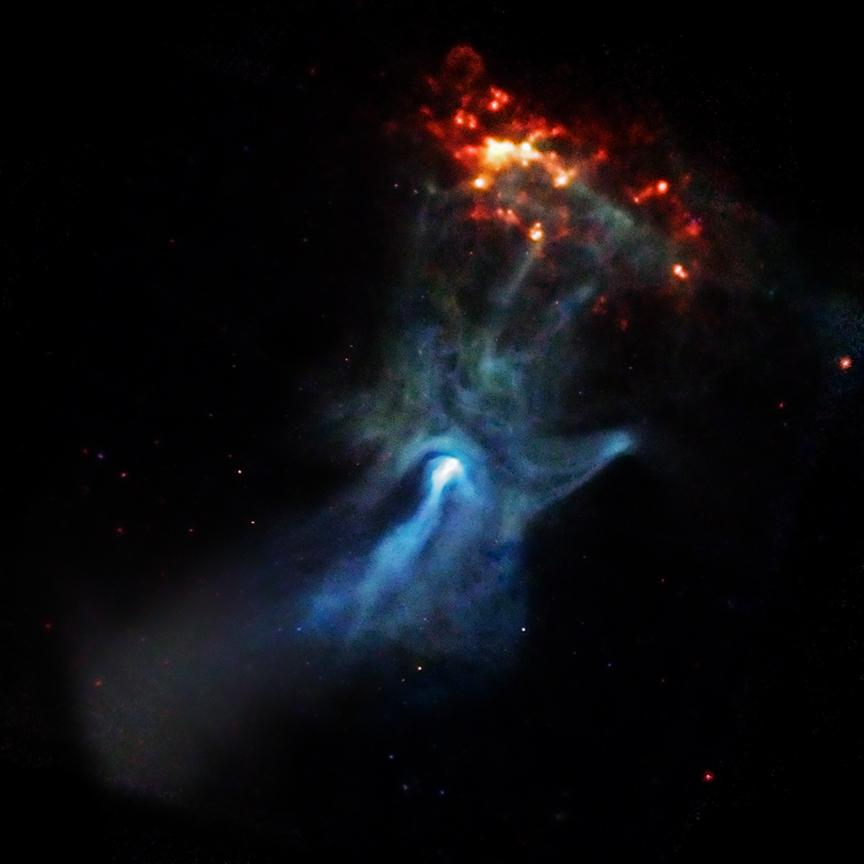
The thing at the base of the palm is about 19 kilometers across. It's a neutron star, the collapsed core of a massive star that exploded. It lies about 17,000 light-years away, in the southern constellation Circinus. Counting from when the explosion's light reached Earth, it's about 1,700 years old.
It spins almost seven times every second. Its magnetic field is roughly 15 trillion times stronger than Earth's. A magnet that strong, spinning that fast, makes it one of the most powerful electric generators in the galaxy.
That generator flings a wind of charged particles out into space. The particles lose their energy as they move through the magnetic field, and that makes them glow in X-rays. The glowing cloud they fill is called a pulsar wind nebula. This one is about 150 light-years across, 15 times as wide as the one around the Crab pulsar.
The "fingers" reach toward clouds of gas left over from the explosion. Where they touch, knots of gas light up in red and orange, like glowing fingertips.
X-ray pictures alone couldn't show the magnetic field that shapes it all. NASA's IXPE telescope, which measures how X-rays are polarized, stared at the hand for 17 days in 2023. That was the longest it had looked at any single object.
The direction of polarization follows the direction of the magnetic field. So IXPE could draw the first map of the field inside the hand. The field lines run along the wrist, through the palm and out into the fingers. They're the bones of the hand.
In places, the light was polarized almost as strongly as physics allows, above 70 percent. To manage that, the magnetic field there must be very straight and orderly. A tangled field would wash the polarization out.
Not every part was so neat. Where the jet begins, near the pulsar, the polarization is weaker, so the field there is more complicated.
Chandra's team couldn't resist one comparison. They set the hand beside the first medical X-ray, Wilhelm Röntgen's picture of his wife's hand. This hand is 150 light-years across.
12. 🌌 Do wide pairs of stars show that gravity changes?
Out at the edges of galaxies, stars move too fast. The visible matter isn't enough to hold them, so something extra must be pulling. Most astronomers think it's dark matter, an invisible substance that has never been caught directly.
A minority think gravity itself works differently when it gets very weak. That idea is called MOND, for Modified Newtonian Dynamics. Mordehai Milgrom proposed it in 1983. In MOND, once the pull drops below a certain tiny level, gravity weakens more slowly than Newton's law says.
That level is incredibly faint. It's nearly a hundred billion times weaker than the pull that holds you on the ground. The outskirts of galaxies reach it, and so does something much closer to home.
Some stars come in pairs so wide that they're thousands of times farther apart than Earth is from the Sun. At that distance, their pull on each other drops below MOND's level. And dark matter isn't expected to matter on such small scales.
That makes wide pairs a clean test. If they orbit each other faster than Newton allows, that's a point for MOND. If not, it's a point for dark matter.
The catch is that an orbit this wide can take hundreds of thousands of years. Nobody can watch one. But the Gaia spacecraft has measured the motions of huge numbers of stars, and statistics can stand in for patience. You compare how fast pairs move with how far apart they are.
In 2023, Kyu-Hyun Chae analyzed about 26,500 wide pairs. He found that the widest ones moved as if gravity were about 1.4 times stronger than Newton predicts. That's about what one version of MOND expects. Chae puts it bluntly: "To me, this cannot be a coincidence."
Indranil Banik's team ran their own test on a carefully chosen set of about 8,600 pairs. They found no sign of MOND at all. Newton fit far better, and MOND was firmly ruled out, at least in the form they tested.
The fight is over the messy details. Some pairs are really triples, with a third star too close to see. Its extra tug makes a pair look like it's moving too fast. Some pairs aren't pairs at all, just two stars that happen to line up. And errors in the measured speeds can fake extra speed too.
Banik faults Chae for keeping pairs whose speeds aren't measured precisely. Chae and his colleagues have published a critical review of the studies that disagree with them. By their count, two groups find a MOND signal and two find none.
Follow-up with other telescopes could show which pairs are hiding a third star. MOND has had wins before, like a faint galaxy whose slow stars it predicted. Whether it holds up for pairs of stars right next door is still being argued.
13. 🌌 Georges Lemaître cut his own discovery out of his paper
In 1927, a Belgian priest and physicist named Georges Lemaître published a paper that should have made him famous. Using Einstein's theory of gravity, he showed that the universe could be expanding. Then he checked the idea against real galaxies.
Astronomers had measured how fast many galaxies were moving. Almost all of them were moving away from us. Lemaître combined those speeds with rough distances published by Edwin Hubble. The farther a galaxy was, the faster it seemed to recede. He worked out the rate of that expansion.
That's the discovery we usually credit to Hubble, two years later. But Lemaître's paper was in French, in the annals of the Scientific Society of Brussels. It went almost unnoticed.
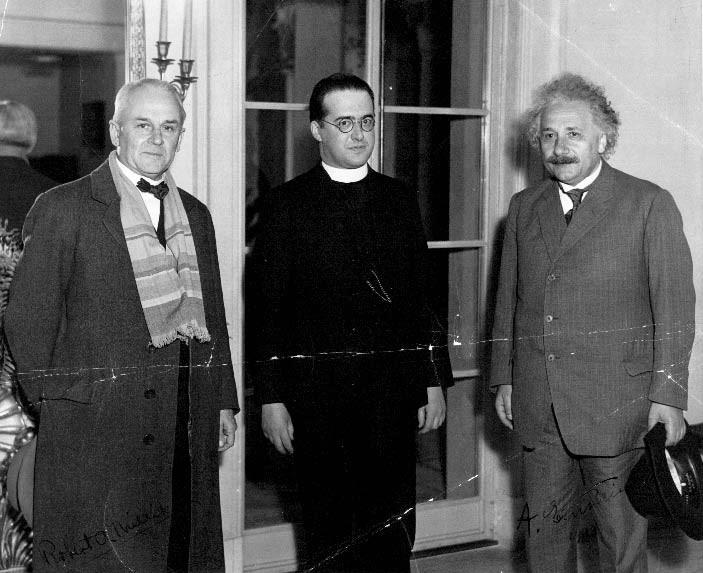
Hubble published his own measurements in 1929. Galaxies were flying apart at speeds that grew with distance. The universe was expanding, and this time everyone noticed.
Britain's Royal Astronomical Society printed Lemaître's paper in English in 1931. Decades later, astronomers comparing the two versions noticed something missing. The passage where Lemaître worked out the expansion rate was gone. A key equation had been changed too, removing his early value for what we now call the Hubble constant.
That looked suspicious. Who had cut it? In 2011, the astronomer Sidney van den Bergh wrote that it suggested a deliberate omission by an unknown translator. Some people wondered whether Hubble had a hand in it, to protect his claim.
Mario Livio decided to find out. He went through hundreds of letters and meeting records of the Royal Astronomical Society, and papers from Lemaître's own archive. He found the culprit. It was Lemaître himself.
Lemaître had translated the paper on his own. In a letter to the editor, he explained why he had dropped the passage. "I did not find advisable to reprint the provisional discussion of radial velocities which is clearly of no actual interest," he wrote.
Hubble had already published better data. As Livio sees it, Lemaître saw no point in printing his rougher numbers again, and simply wasn't fussed about who got there first. He went on to propose that the universe began from a primeval atom, the idea that would later be called the Big Bang.
The International Astronomical Union put it to a vote in 2018. Of the members who voted, 78 percent agreed that the law of cosmic expansion should be called the Hubble–Lemaître law.
Hubble had his own big moment with a single word on a glass plate. Lemaître's name sits beside his now because someone went looking for a missing paragraph, and found a man who hadn't thought it worth keeping.
🌙 One last thought before you sleep
Voyager 2 spent a few days near Uranus forty years ago, and those few days are still almost all we know about its magnetism. It may have arrived during a gust that blows less than one time in twenty. Pogson had ten minutes between clouds.
So much of astronomy comes down to one look, at one moment, by whoever happened to be there. I find that thrilling, and a little humbling. Somewhere tonight, a telescope is taking the only look anyone will get at something for a very long time.
That's all for tonight. Thanks for wondering along with me. Good night, and clear skies. 🌌
— Kasi